




PRODUCTS

Silo Control, Silo Protection and Silo Monitoring Systems

In industries that handle large volumes of dry bulk materials in powdered or granular form, effective and reliable storage is essential for preserving product quality and ensuring smooth operations. Bulk storage silos provide a dependable solution by protecting valuable raw materials from contamination, moisture, and environmental exposure.

Bulk material silos, manufactured by Polimak with high-quality materials and advanced engineering, optimize space management while maintaining the quality and integrity of stored products over extended periods. Effective handling during both filling and discharging processes is essential not only to guarantee the safety of the industrial plant and its operators but also to minimize material loss, reduce dust emissions, and prevent environmental pollution. Proper silo management contributes to more environmentally friendly 
Polimak offers comprehensive Silo Control, Silo Protection, and Silo Monitoring Systems that include a wide range of dry bulk material handling equipment, advanced automation, and software solutions designed to operate and protect silos in the most efficient and reliable manner.

Polimak designs, manufactures, and delivers one of the industry’s most sophisticated silo control, monitoring, and protection systems, enabling plant owners to efficiently monitor and manage their silos whether at a single site or across multiple locations worldwide. This advanced centralized control helps optimize operations, enhance safety, minimize downtime, and enhance plant productivity.

1. Polimak Silo Control System

Reliable and safe handling of bulk materials depends on effective silo control and protection systems. These systems, equipped with PLC-based automation, enable continuous monitoring and precise control of silo operations, ensuring the safety of both equipment and personnel across the plant.

Complete control of a silo system is not limited to the silo alone but also covers all related upstream (e.g., pneumatic conveyors) and downstream (e.g., rotary valves, screw conveyors) equipment. These systems coordinate the operation of bulk material loading mechanisms, which may include mechanical conveyors such as bucket elevators or screw conveyors, as well as pneumatic conveying systems (both dilute and dense phase) or bulk tanker trucks.

The silo can experience hazardous conditions including overfilling, overpressurization, and underpressurization. The control system actively prevents these risks by continuously processing signals from various sensors such as pressure transmitters, level detectors, temperature sensors, and filter differential pressure switches. Neglecting these risks can lead to structural damage, equipment failure, or even explosions due to dust ignition or pressure buildup.

The system not only performs real-time monitoring but also tracks the condition and functionality of essential components such as pressure relief valves, level switches, air pads, and silo venting filters. This constant and comprehensive supervision is maintained through continuous diagnostics and routine performance assessments.

A key safety feature of the Polimak Silo Control System is the automated self-testing function. This mechanism runs both periodically and before each filling operation to provide system reliability. This automated testing process ensures all safety devices and system logic are functioning correctly before bulk material is transferred into the silo.

Our silo control systems integrate control, protection, and predictive maintenance features to improve operational efficiency, minimize downtime, reduce the risk of accidents, and help protect the environment, making them indispensable components in modern bulk material handling facilities.

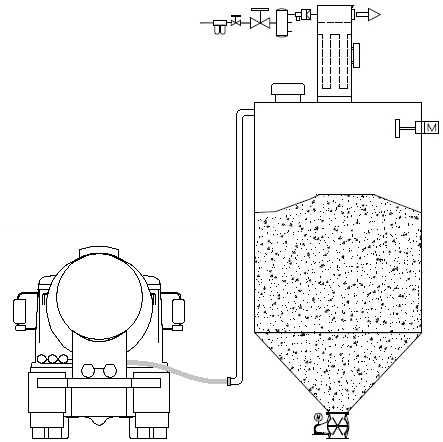
Silo Filling Control System For Bulk Truck Filled Silos  

Discover

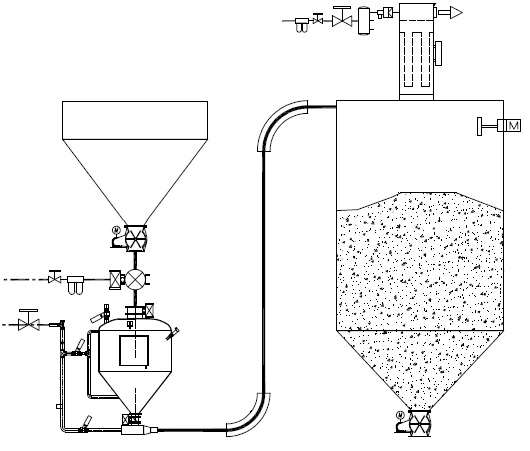
Silo Filling Control System for Pneumatic Conveying Applications 

Discover

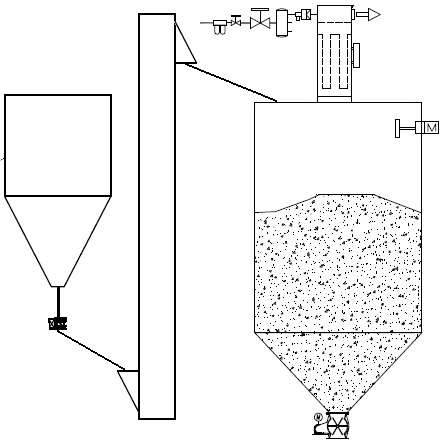
Silo Filling Control System For Silos Filled By Mechanical Conveyors  

Discover

Silo Discharge Control System  
     

Discover

2. Silo Safety and Silo Protection System

Bulk material loading and discharging in storage silos can present several safety risks, including overfilling, excessive internal pressure, and combustible dust explosions. These hazards can pose serious threats to the integrity of the silo, the safety of plant personnel, and the continuity of operations.

A silo control system manages these risks by continuously monitoring and processing signals from multiple sensors installed on and around the silo. The system processes the received data and takes necessary automated actions to protect the silo and its surroundings. These actions include halting material flow, activating alarms, or venting excess pressure.

In this silo safety and protection system, critical components such as pressure relief valves, level sensors, temperature probes, and dust collection systems are monitored in real time. If any malfunction or abnormal condition is detected, plant operators are immediately alerted for corrective action.

In addition to active, real-time protection, the system also supports predictive maintenance by tracking the health and status of key equipment. This proactive approach helps minimize unplanned downtime and enhances overall operational efficiency.

Polimak silo safety and control system provides an integrated and effective safety solution, ensuring the protection of the silo structure, plant workers, and the plant environment, not only by preventing hazards but also by promoting sustainability.

Common Risks During Powder Handling in Silos and Their Protection Systems

Silo Overpressure Protection

Discover

Silo Underpressure Protection

Discover

Silo Overfilling
Protection

Discover

Explosion Protection for Combustible Dusts     

Discover

Operator Safety Warning System for Adverse Weather Conditions     

Discover

3. Silo Equipment Health Monitoring System

Operating a reliable system requires proactive and sustained testing. This process begins at the system level and extends down to individual components. This approach not only ensures functional integrity but also enhances resilience by enabling early detection of potential issues. In industrial settings, bulk solids silos function as key infrastructure for the safe storage of raw materials. These silos are equipped with multiple pieces of equipment working in coordination to maintain safe, efficient, sustainable and dependable storage conditions.

Preventing equipment failures that could disrupt operations or pose safety risks is the primary function of the Silo Equipment Health Monitoring System, engineered and manufactured by Polimak. The system is specifically designed to monitor the operational health and performance of key components installed on storage silos—such as level sensors, temperature probes, pressure relief valves, dust collectors, and mechanical discharge devices. Continuous monitoring of these components allows the Silo Equipment Health Monitoring System to detect irregularities, signs of wear, or malfunctions at an early stage.
Implementing this system ensures early detection of equipment failures, reducing the risk of costly downtime, material loss, structural damage, and safety hazards. The Silo Equipment Health Monitoring System enables predictive maintenance and real-time alerts, allowing operators to take timely corrective action. This approach improves overall system reliability, reduces maintenance costs, and extends the lifespan of silo infrastructure.

Monitoring capabilities for the following equipment are offered based on the application and necessary safety requirements:

Pressure Relief Valve Condition Monitoring

Discover

Jet Filter (Dust Collector) Condition Monitoring

Discover

Pinch Valve Condition Monitoring

Discover

Process Air Supply Monitoring

Discover

Motor Vibration Monitoring

Discover

4. Industrial IOT Based Silo Level Monitoring and Inventory System

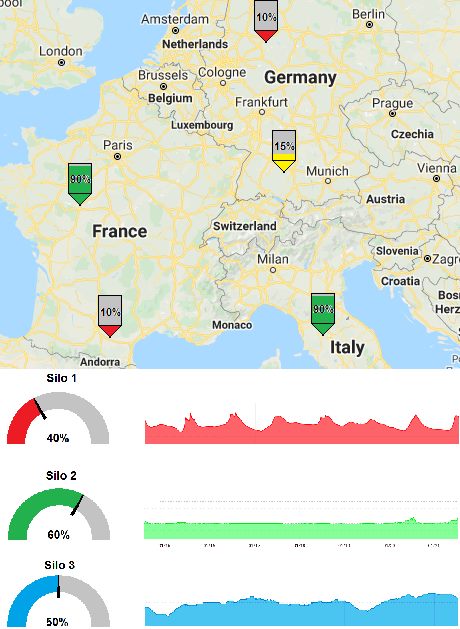
Polimak’s long years of experience in bulk material handling have enabled the development of the Industrial IOT Based Silo Level Monitoring and Inventory System. The system is designed to accurately track the level or weight of bulk solids stored within silos. It provides plant operators with critical information to efficiently manage raw material inventories. The quantity of powdered material inside a silo is measured using a combination of level sensors and load cells, which provide precise data on the material’s volume and weight.

These sensors are fully integrated with Polimak’s Politrace Inventory Monitoring Platform, a cloud-based solution that centralizes data collection and analysis. Sensor readings are transmitted securely via industrial IoT gateways, ensuring data integrity and protection against cyber threats. This setup enables real-time monitoring of silo inventories, allowing users to access up-to-date information through a web-based user interface.

The platform supports both local and remote monitoring, giving users the flexibility to track their material stocks anytime and from anywhere in the world. This enhanced monitoring capability helps optimize inventory management, reduces the risk of stockouts or overstocking, and supports better operational decision-making.

Silo monitoring provides access to various data points, customized to suit the specific operational needs and the nature of the stored material, such as:

Name of the Stored Bulk Material

Discover

Silo Filling
Level

Discover

Silo Filling and Discharging Rate

Discover

Operator
Identification

Discover

Alarm Notifications for Critical Limits

Discover

Mapped Overview of Silo Locations

Discover
INSIGHTS

Suggested Products

Explore our wide range of high-quality accessories for your bulk solids handling machinery.

TAGLINE Privacy Policy Lorem ipsum dolor sit amet, consectetur adipiscing elit. Maecenas ut lacus eros. Nam et orci ut lectus sodales molestie sollicitudin nec leo. Aliquam viverra ornare elit et maximus. Nunc eu ultrices sapien, et euismod nisl. Proin porttitor neque enim. Who we are Suggested text: Our website address is: https://v1.polimak.com/. Comments Suggested text: […]

Models

Our Engineering, Your Success… DISCOVER OUR PRODUCTS OUR PRODUCTS Explore our wide range of versatile bulk material handling machinery. Explore our wide range of versatile bulk material handling machinery. View all Rotary Valve A rotary valve, also known as an airlock feeder or airlock valve, is a piece of bulk material handling equipment used to […]

Models

OVER 40 YEARS OF SERVICE About Us Polimak is a leading engineering and fabrication company, specializing in bulk solids handling technologies for over four decades. Our wide range of versatile bulk material handling machinery is appropriate for value-added logistics as well as handling powders, granules and pellets in the food, chemical, plastics, minerals, and agriculture […]

Models

SHAPE THE FUTURE Career We are an internationally and rapidly growing dry bulk solids handling equipment and systems supplier which reckons that one of the key elements to success is acquiring a passionate, talented and diverse workforce. At Polimak, we work hard to establish an environment for our employees that delivers thought-provoking objectives, thus fostering […]

Models

Products Explore Our Wide Range of Versatile Products At Polimak, we offer a diverse selection of cutting-edge bulk solids handling machinery. Our products are designed to meet the unique needs of various industries, including food, chemical, plastics, minerals, and agriculture processing. From efficient logistics solutions to heavy-duty industrial applications, our exceptional range of products ensures […]

Models
LATEST

Related News

Stay updated with our informative blog posts.
DOWNLOAD

Related Documents

Lorem Ipsum is simply dummy text of the printing and typesetting industry.

Discover our amazing products today

Discover our amazing products today
Join our newsletter to stay up to date on features and releases.

By subscribing you agree to with our Privacy Policy and provide consent to receive updates from our company.

© 2024 Polimak. All rights reserved. Design & Development by brain.work
Contact Us
These valves are typically actuated by pneumatic actuators and are used to automatically open and close the product flow to discharge material to downstream equipment.
Installed below silos or hoppers, these valves are used for maintenance operations of equipment such as rotary valves, screw feeders, etc., that are positioned below the butterfly valve.
These valves are typically actuated by pneumatic actuators and are used to automatically open and close the product flow to discharge material to downstream equipment.
In this design, the butterfly valve is sandwiched between two flanges. Rubber sealing at both faces of the valve provides a tight seal between the flanges and the wafer butterfly valve.
One side of the valve has a bolted flange connection, while the other side features a built-in short pipe designed for fixing a flexible sleeve.
These valves have bolted flange connections on both sides, making them suitable for installation on silos, hoppers, screw feeders, and similar applications.
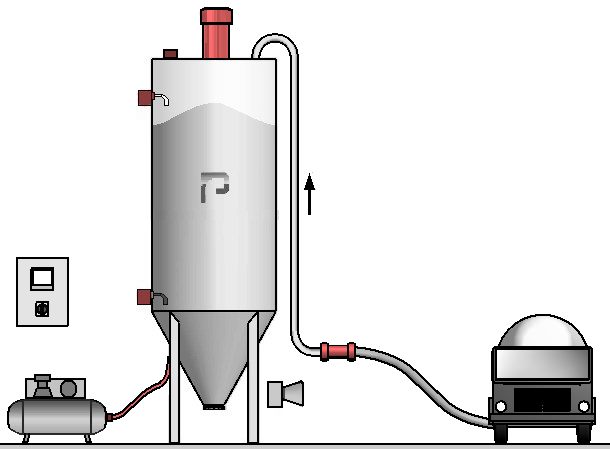
Bulk tanker trucks or open trucks can be filled with powdered materials delivered within FIBC bags. These systems generally consist of bulk bag discharging station, mechanical or pneumatic conveyor and loading bellow. Big bag discharge station transfers the bulk solid from big bag to conveying system. Conveying system transfers it to truck loading area. And loading bellow is used to fill tanker truck without any dust emission. Since truck loading operations are done within limited time, high capacity big bag discharge systems and bulk material conveying systems are used. For short distances, screw conveyors are preferred to transfer material from big bag discharge station to truck loading chute. For long conveying distances, pneumatic conveying systems provide better service. There may exist a storage hopper or silo above bulk truck loading bellow to compensate material flow between inlet and outlet. Bulk bag discharge and truck filling systems have automatic control system that monitors product level in truck and operates all equipment accordingly. Optional weighing system can be added to measure the amount of material that is filled to truck.
Big bag discharge systems can deliver dry bulk solids in powder and granular form to weighing and batching systems. The loading hopper of the weighing system should remain full during dosing and batching. Big bag discharge systems can monitor the product level in the loading hopper and maintain a constant level automatically. Depending on the dosing speed and conveying distance, mechanical conveying systems or pneumatic loading systems may be used. Dust collectors can be employed to prevent dust emissions during hopper loading, especially for materials with high dust content.
Dry bulk packaging systems are used to fill powdered or granular materials into bags, drums, jars, sacks, etc. Bulk materials delivered in big bags must be transferred to packaging machines without interruption. The loading hopper of the packaging system should remain full during the filling and packaging process. Big bag discharge systems can monitor the product level in the loading hopper and maintain a constant level automatically. Depending on the packaging speed, mechanical conveying systems or pneumatic loading systems can be selected. Dust collectors can be used to prevent dust emissions during hopper loading, especially for materials with high dust content.
Mixer automation systems are used to mix dry bulk solids according to specific recipes. Raw materials delivered in FIBC bags can be transferred to mixing units through a combination of conveying equipment and bulk bag discharge systems. Depending on the type of application, pneumatic conveying or mechanical feeding systems can be used to fill mixers. Big bag discharge stations can be manufactured with built-in dosing systems. The amount of raw material to be loaded into the mixer is automatically controlled with the help of a weighing and dosing system. Dust collectors can be used to prevent dust emissions during the mixer filling process.
Bulk material stored in big bags can be automatically filled into small bags. Big bag discharge systems come with optional built-in bag filling units. For low filling capacities, these units are installed below the big bag discharge hopper, providing a practical and cost-effective solution. Both big bag discharging and bag filling operations can be handled by a single, compact system. For higher bag filling needs, bag filling machines are installed near the bulk bag discharge stations. Pneumatic conveying systems or mechanical conveyors can be used to transfer bulk material from the FIBC bag discharge station to the bag or sack filling system.
Mechanical conveyors can be used for silo loading from big bag discharge stations. Screw feeders, bucket elevators, rotary valves, or chain conveyors are connected to big bag discharge stations to fill silos. The selection of conveying equipment directly depends on the conveying distance, height, transferred material, and capacity. Bucket elevators are preferred for high silos, while screw feeders are preferred for shorter silos and short distances. The big bag discharge system can be installed on top of the silo for faster filling. In this case, rotary valves or butterfly valves are better choices as they provide simple flow control. Dust collection systems may be required depending on the dust content of the bulk solid. During silo loading, air content in the silo escapes to the atmosphere and carries some dust along with it. Vacuum fans and jet filters in dust collectors prevent dust emissions into the environment. The collected dust is sent back to the silo, thus preventing product loss.
Pneumatic conveying systems installed after bulk bag discharge units transfer bulk material through conveying pipelines to fill silos. This configuration is useful in applications where high transfer rates and long conveying distances are needed. In production lines where raw materials are stored in warehouses far from storage silos, bulk bag discharge stations can be installed close to the warehouses, and pneumatic conveying systems are used to fill silos from long distances. This design reduces the need for forklifts and cranes for bulk material transfer on the production site and increases overall efficiency.

Pneumatic conveying systems used for silo loading utilize blower pumps or compressors. Motor power, pipeline diameter, and equipment selection depend on the type of bulk material, transfer distance, silo height, and transfer capacity. Level sensors, jet filters, and other equipment are installed on storage silos to ensure the proper operation of the silo filling system.
Pneumatic conveying systems installed after bag dump units transfer bulk material through pipelines to fill silos. This configuration is ideal for applications requiring high transfer rates and long conveying distances. In production lines where raw materials are stored in warehouses far from storage silos, bag dump stations can be installed close to warehouses, allowing pneumatic conveying systems to transport materials over long distances. This design reduces the excessive use of forklifts and cranes for bulk material transfer within the production site, improving overall efficiency.

Pneumatic transfer systems used for silo loading utilize blower pumps or compressors. Motor power, pipeline diameter, and equipment selection depend on factors such as the type of bulk material, transfer distance, silo height, and transfer capacity. Level sensors, jet filters, and other equipment are installed on storage silos to ensure the proper operation of the silo filling system.
Mechanical conveyors can be used for silo loading from bag dump stations. In this configuration, screw feeders, bucket elevators, rotary valves, or chain conveyors are connected to bag dump stations to fill silos. The selection of conveying equipment depends on factors such as conveying distance, height, material properties, and capacity. Bucket elevators are preferred for high silos, while screw feeders are ideal for shorter silos and short distances. Bag dump systems can be installed on top of the silo for faster filling. In such cases, rotary valves or butterfly valves are better choices as they provide simple flow control.

Dust collection systems may be required depending on the dust content of the bulk solid. During silo loading, air inside the silo escapes to the atmosphere, carrying dust particles with it. Dust collectors equipped with a vacuum fan and jet filter capture airborne dust. The collected dust is returned to the silo, preventing product loss and ensuring a cleaner environment.
The inlet skirt is an optional feature designed to extend the lifespan of the flexible connector sleeve. Its upper portion is attached to the outlet port of the upstream equipment and extends down into the bin activator’s inlet port. The primary function of the inlet skirt is to serve as a protective shield, safeguarding the flexible connector seal from wear and damage.
A vibratory motor is externally mounted to the bin activator. When powered, the motor generates vibrations that facilitate a steady flow of dry bulk materials within the system. Depending on the application requirements, one or two vibratory motors can be installed externally.
To accommodate a bin activator, the cone of a silo must be shorter than usual, resulting in a wider outlet. A flange supplied with the bin activator is separately welded to the silo’s outlet, slightly above the opening, at the production site. Once installed, the vibrating bin discharger is securely bolted to the flange, ensuring a stable and reliable connection.
Special spring suspension links and an engineered polymer seal work together to create a flexible connection between a vibrating bin discharger and the equipment positioned above it.

The proper design and installation of the polyurethane seal prevent it from slipping off and ensure a secure seal, eliminating the risk of dry bulk material leakage. Additionally, the seal offers high stress resistance and long-term durability, withstanding stresses caused by motor vibrations, pressure conditions, and other operational factors.

Externally installed spring suspensions provide full resilience to the vibrations of the cone head. They ensure that the generated vibrations affect only the cone itself rather than the upstream equipment structure.
An internally tapered, conical-shaped baffle plate is positioned at the center of the bin activator’s diameter. The baffle is rigidly attached to the equipment body using structural steel components. It facilitates bulk material flow from upstream equipment by directly inducing vibrations into the material.

A secondary deflector plate reduces the weight of the bulk material in the lower portion of the bin activator by acting as a wedge beneath the material, directing it around the areas adjacent to the cone’s surface.

Polimak baffle plates are available in various configurations, including convex and cone plates, and in different angles (15°, 30°, 45°, or even 60°) depending on the flow characteristics of the handled bulk material and the specific application requirements.