Polimak jet filters are designed for a wide range of applications, offering efficient dust collection and filtration solutions across various industries. They are commonly used in pneumatic conveying systems, silo filling by bulk truck, silo and hopper filling with mechanical conveyors, mixer filling, packaging systems, bulk truck, tanker truck, ship and stockpile loading operations, as well as in various points along production lines. Polimak jet filters help maintain clean operations, protect equipment, and ensure compliance with safety and environmental standards in various sectors including food, chemical, cement, and mining.
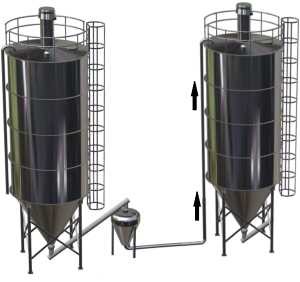
Pneumatic Conveying Silo Filter
Pneumatic Conveying Systems
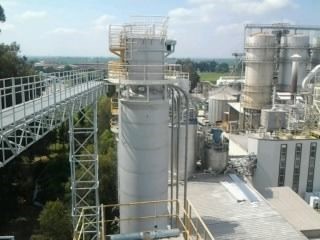
Silo top jet filters are installed to vent silos, tanks, and containers during pneumatic filling processes. They allow air to escape while effectively retaining dust within the system, ensuring clean and efficient operation.
Blowers and compressors provide the air required for pneumatic conveying systems, enabling the transfer of bulk solids to silos, tanks, and containers. Jet filters are used to clean and safely discharge the conveying air, preventing dust emissions during the process.
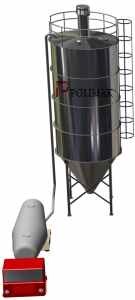
Silo Filling By Bulk Truck
Bulk tanker trucks are equipped with built-in air compressors to transfer bulk materials into silos using pressurized air. During this process, a significant amount of dust can be generated as bulk solids enters the silo.
During the filling of the silo, jet filters installed on the silo tops capture airborne dust particles while allowing the pressurized air to escape. This ensures a clean and safe filling operation while preventing dust emissions into the environment.
Silotop Filter
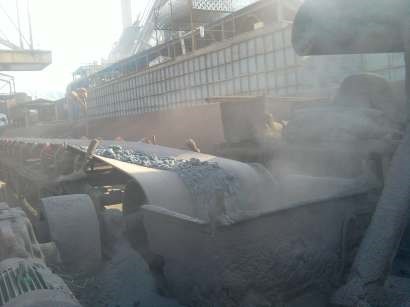
Belt Conveyor Discharge
Silo and Hopper Filling With Mechanical Conveyors
Mechanical conveying systems used for filling silos and hoppers include screw feeders, chain conveyors, and bucket elevators. These systems often release a high volume of dust emissions during operation. Therefore, jet filters are essential to effectively capture dust and maintain clean air quality during the entire bulk material handling process.
Jet pulse filters with built-in vacuum fans are used to capture dust-filled air from industrial processes. The filters remove dust particles, allowing clean air to be discharged safely into the atmosphere. Meanwhile, the collected dust is gathered and stored for proper disposal or reuse.
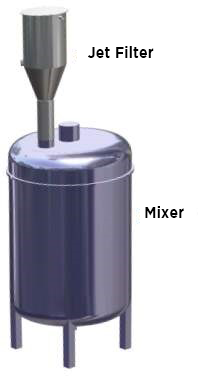
Mixer Filling
Mixers can be filled manually, by mechanical conveyors, pneumatic conveying, or through automatic dosing systems using various loading equipment. One of the challenges in these operations is that mixer filling and mixing can result in some dust emissions to the environment. These processes are frequently used in industries such as food processing, chemicals, pharmaceuticals, and construction materials. Common materials handled include powdered ingredients, granules, additives, and raw food components.
The vacuum fan of the jet filter collects dust present within the surrounding area. Jet filters installed above mixers effectively capture this dust to maintain a clean working environment. Additionally, the collected dust can be returned directly back into the mixers, preventing the loss of valuable raw materials.
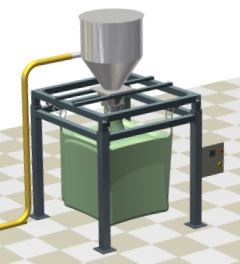
Jet Filter Of Bigbag Filling System
Packaging System
Automatic bag filling systems, big bag filling systems, and similar packaging machines may experience dust leakage during the filling operation. This dust leakage can affect workplace cleanliness and product quality if not properly controlled. These systems are widely used in industries such as agriculture, chemicals, food processing, and construction materials, handling products like grains, powders, fertilizers, and cement.
As the package fills, the air inside is expelled from the package, often carrying dust particles along with it. This released dust can create a dusty environment and lead to material loss if not properly managed. To control these emissions, dust collectors are installed to capture and filter the escaping air, ensuring a cleaner and safer filling process.
Bulk Truck, Tanker Truck, Ship and Stockpile Loading
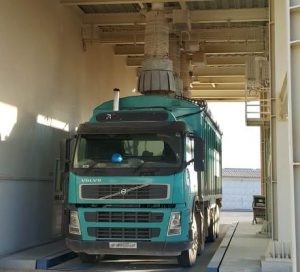
Loading bellows or telescopic chutes provide dust-free loading of trucks, ships, and stockpiles by providing a sealed transfer point that contains bulk solids during the loading process. They effectively prevent the spread of dust generated when filling bulk solids, ensuring cleaner operations and improved air quality around the loading area.
However, to maintain this dust containment, the dust must be effectively collected by a vacuum system. Jet filters play a crucial role by supplying the necessary vacuum air to capture dust particles inside the loading bellow. The collected dust is then safely discharged back into the truck, ship, or stockpile, minimizing material loss and improving overall operational efficiency as well as protecting the environment and worker health.
Open Truck Loading Bellow With Jet Filter
Production Lines
In production lines that handle bulk solids, central dust collection systems are widely used to maintain clean and safe working environments. Jet filters collect dust from various points within the production process, including transfer stations, mixing areas, packaging units, and conveyor systems, ensuring efficient dust removal at every stage.
Depending on the specific application and operational requirements, either baghouse filters or cartridge-type jet filters can be installed. Baghouse filters are typically used for handling larger volumes of dust with lower air-to-cloth ratios, while cartridge-type filters are preferred for finer dust particles and applications requiring a more compact design. Selecting the appropriate filter type ensures optimal filtration efficiency and system performance.
In filter units, vacuum fans are used to collect the dust and direct it to the filter units. The collected dust can be conveyed to storage silos using mechanical or pneumatic systems and then loaded into bulk trucks for disposal.
Other Jet Filter Applications
• Crushers and breakers: Capture dust generated during the crushing and breaking of raw materials.
• Iron and steel foundries: Control emissions from melting and casting processes.
• Blast furnaces: Filter dust and particulates released during iron production.
• Electrical arc furnaces: Collect fine dust produced during steel melting operations.
• Cement plants: Manage dust effectively from grinding, mixing, and packing cement.
• Food industries: Ensure dust-free environments when handling powdered and granular ingredients.
• Gypsum factories: Capture effectively gypsum dust during processing and packaging processes.
• Building materials production plants: Control dust from manufacturing materials like bricks and tiles.
• Coal-burning energy plants: Filter fly ash and particulate matter from combustion gases.
• Concrete batching plants: Collect dust during mixing and batching operations, improving sustainability.
• Mining and ore processing plants: Collect dust generated during extraction, crushing, and transport of ores.
These valves are typically actuated by pneumatic actuators and are used to automatically open and close the product flow to discharge material to downstream equipment.
Installed below silos or hoppers, these valves are used for maintenance operations of equipment such as rotary valves, screw feeders, etc., that are positioned below the butterfly valve.
These valves are typically actuated by pneumatic actuators and are used to automatically open and close the product flow to discharge material to downstream equipment.
In this design, the butterfly valve is sandwiched between two flanges. Rubber sealing at both faces of the valve provides a tight seal between the flanges and the wafer butterfly valve.
One side of the valve has a bolted flange connection, while the other side features a built-in short pipe designed for fixing a flexible sleeve.
These valves have bolted flange connections on both sides, making them suitable for installation on silos, hoppers, screw feeders, and similar applications.
Bulk tanker trucks or open trucks can be filled with powdered materials delivered within FIBC bags. These systems generally consist of bulk bag discharging station, mechanical or pneumatic conveyor and loading bellow. Big bag discharge station transfers the bulk solid from big bag to conveying system. Conveying system transfers it to truck loading area. And loading bellow is used to fill tanker truck without any dust emission. Since truck loading operations are done within limited time, high capacity big bag discharge systems and bulk material conveying systems are used. For short distances, screw conveyors are preferred to transfer material from big bag discharge station to truck loading chute. For long conveying distances, pneumatic conveying systems provide better service. There may exist a storage hopper or silo above bulk truck loading bellow to compensate material flow between inlet and outlet. Bulk bag discharge and truck filling systems have automatic control system that monitors product level in truck and operates all equipment accordingly. Optional weighing system can be added to measure the amount of material that is filled to truck.
Big bag discharge systems can deliver dry bulk solids in powder and granular form to weighing and batching systems. The loading hopper of the weighing system should remain full during dosing and batching. Big bag discharge systems can monitor the product level in the loading hopper and maintain a constant level automatically. Depending on the dosing speed and conveying distance, mechanical conveying systems or pneumatic loading systems may be used. Dust collectors can be employed to prevent dust emissions during hopper loading, especially for materials with high dust content.
Dry bulk packaging systems are used to fill powdered or granular materials into bags, drums, jars, sacks, etc. Bulk materials delivered in big bags must be transferred to packaging machines without interruption. The loading hopper of the packaging system should remain full during the filling and packaging process. Big bag discharge systems can monitor the product level in the loading hopper and maintain a constant level automatically. Depending on the packaging speed, mechanical conveying systems or pneumatic loading systems can be selected. Dust collectors can be used to prevent dust emissions during hopper loading, especially for materials with high dust content.
Mixer automation systems are used to mix dry bulk solids according to specific recipes. Raw materials delivered in FIBC bags can be transferred to mixing units through a combination of conveying equipment and bulk bag discharge systems. Depending on the type of application, pneumatic conveying or mechanical feeding systems can be used to fill mixers. Big bag discharge stations can be manufactured with built-in dosing systems. The amount of raw material to be loaded into the mixer is automatically controlled with the help of a weighing and dosing system. Dust collectors can be used to prevent dust emissions during the mixer filling process.
Bulk material stored in big bags can be automatically filled into small bags. Big bag discharge systems come with optional built-in bag filling units. For low filling capacities, these units are installed below the big bag discharge hopper, providing a practical and cost-effective solution. Both big bag discharging and bag filling operations can be handled by a single, compact system. For higher bag filling needs, bag filling machines are installed near the bulk bag discharge stations. Pneumatic conveying systems or mechanical conveyors can be used to transfer bulk material from the FIBC bag discharge station to the bag or sack filling system.
Mechanical conveyors can be used for silo loading from big bag discharge stations. Screw feeders, bucket elevators, rotary valves, or chain conveyors are connected to big bag discharge stations to fill silos. The selection of conveying equipment directly depends on the conveying distance, height, transferred material, and capacity. Bucket elevators are preferred for high silos, while screw feeders are preferred for shorter silos and short distances. The big bag discharge system can be installed on top of the silo for faster filling. In this case, rotary valves or butterfly valves are better choices as they provide simple flow control. Dust collection systems may be required depending on the dust content of the bulk solid. During silo loading, air content in the silo escapes to the atmosphere and carries some dust along with it. Vacuum fans and jet filters in dust collectors prevent dust emissions into the environment. The collected dust is sent back to the silo, thus preventing product loss.
Pneumatic conveying systems installed after bulk bag discharge units transfer bulk material through conveying pipelines to fill silos. This configuration is useful in applications where high transfer rates and long conveying distances are needed. In production lines where raw materials are stored in warehouses far from storage silos, bulk bag discharge stations can be installed close to the warehouses, and pneumatic conveying systems are used to fill silos from long distances. This design reduces the need for forklifts and cranes for bulk material transfer on the production site and increases overall efficiency.
Pneumatic conveying systems used for silo loading utilize blower pumps or compressors. Motor power, pipeline diameter, and equipment selection depend on the type of bulk material, transfer distance, silo height, and transfer capacity. Level sensors, jet filters, and other equipment are installed on storage silos to ensure the proper operation of the silo filling system.
Pneumatic conveying systems installed after bag dump units transfer bulk material through pipelines to fill silos. This configuration is ideal for applications requiring high transfer rates and long conveying distances. In production lines where raw materials are stored in warehouses far from storage silos, bag dump stations can be installed close to warehouses, allowing pneumatic conveying systems to transport materials over long distances. This design reduces the excessive use of forklifts and cranes for bulk material transfer within the production site, improving overall efficiency.
Pneumatic transfer systems used for silo loading utilize blower pumps or compressors. Motor power, pipeline diameter, and equipment selection depend on factors such as the type of bulk material, transfer distance, silo height, and transfer capacity. Level sensors, jet filters, and other equipment are installed on storage silos to ensure the proper operation of the silo filling system.
Mechanical conveyors can be used for silo loading from bag dump stations. In this configuration, screw feeders, bucket elevators, rotary valves, or chain conveyors are connected to bag dump stations to fill silos. The selection of conveying equipment depends on factors such as conveying distance, height, material properties, and capacity. Bucket elevators are preferred for high silos, while screw feeders are ideal for shorter silos and short distances. Bag dump systems can be installed on top of the silo for faster filling. In such cases, rotary valves or butterfly valves are better choices as they provide simple flow control.
Dust collection systems may be required depending on the dust content of the bulk solid. During silo loading, air inside the silo escapes to the atmosphere, carrying dust particles with it. Dust collectors equipped with a vacuum fan and jet filter capture airborne dust. The collected dust is returned to the silo, preventing product loss and ensuring a cleaner environment.
The inlet skirt is an optional feature designed to extend the lifespan of the flexible connector sleeve. Its upper portion is attached to the outlet port of the upstream equipment and extends down into the bin activator’s inlet port. The primary function of the inlet skirt is to serve as a protective shield, safeguarding the flexible connector seal from wear and damage.
A vibratory motor is externally mounted to the bin activator. When powered, the motor generates vibrations that facilitate a steady flow of dry bulk materials within the system. Depending on the application requirements, one or two vibratory motors can be installed externally.
To accommodate a bin activator, the cone of a silo must be shorter than usual, resulting in a wider outlet. A flange supplied with the bin activator is separately welded to the silo’s outlet, slightly above the opening, at the production site. Once installed, the vibrating bin discharger is securely bolted to the flange, ensuring a stable and reliable connection.
Special spring suspension links and an engineered polymer seal work together to create a flexible connection between a vibrating bin discharger and the equipment positioned above it.
The proper design and installation of the polyurethane seal prevent it from slipping off and ensure a secure seal, eliminating the risk of dry bulk material leakage. Additionally, the seal offers high stress resistance and long-term durability, withstanding stresses caused by motor vibrations, pressure conditions, and other operational factors.
Externally installed spring suspensions provide full resilience to the vibrations of the cone head. They ensure that the generated vibrations affect only the cone itself rather than the upstream equipment structure.
An internally tapered, conical-shaped baffle plate is positioned at the center of the bin activator’s diameter. The baffle is rigidly attached to the equipment body using structural steel components. It facilitates bulk material flow from upstream equipment by directly inducing vibrations into the material.
A secondary deflector plate reduces the weight of the bulk material in the lower portion of the bin activator by acting as a wedge beneath the material, directing it around the areas adjacent to the cone’s surface.
Polimak baffle plates are available in various configurations, including convex and cone plates, and in different angles (15°, 30°, 45°, or even 60°) depending on the flow characteristics of the handled bulk material and the specific application requirements.