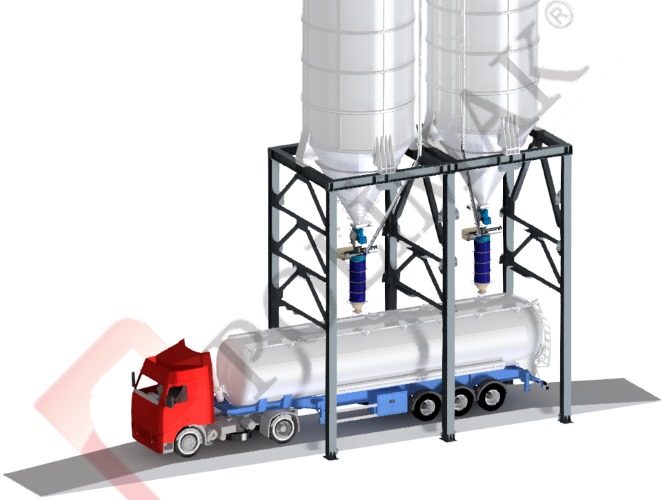
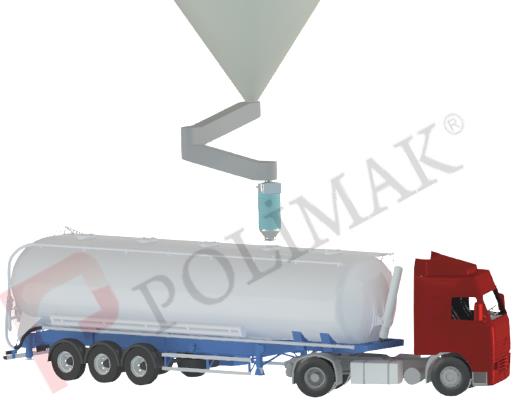
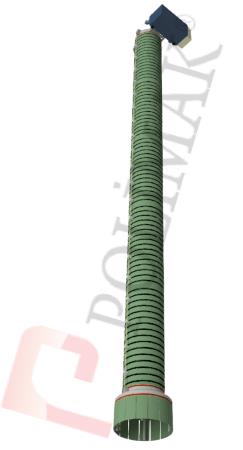
Polimak’s dry bulk loading bellows come with an extensive range of optional accessories and components designed to meet diverse operational requirements. These options allow for customization and enhanced performance, ensuring that the loading system can be tailored to specific process needs and environmental conditions.
Dust Collector
Effective dust collection is a critical part of bulk solid loading systems, ensuring safe, clean, and environmental operations. During the loading process, fine particles can become airborne, posing risks to both workers and equipment, as well as contributing to environmental pollution. To overcome all these challenges, dust collectors are integrated into loading bellow systems to capture fugitive dust directly at the source.
Polimak offers a wide range of dust collection options tailored to specific application needs, depending on the installation layout, material type, and dust load. These include In-Line Dust Collectors for compact setups, Offset Type Dust Collectors for systems with side-mounted extraction, Separate Dust Collectors for remote filtration units, and Central Dust Collectors that serve multiple loading points simultaneously. Choosing the right model improves air quality, supports regulatory compliance, and improves the overall efficiency and reliability of the loading operation.
In-Line Dust Collector
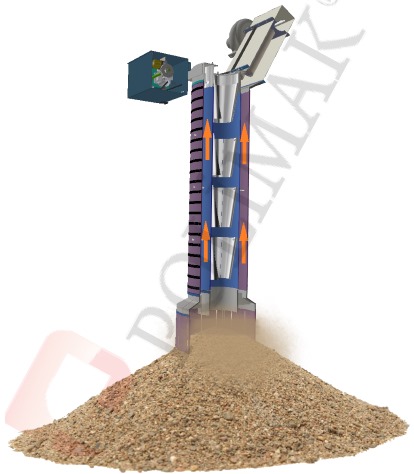
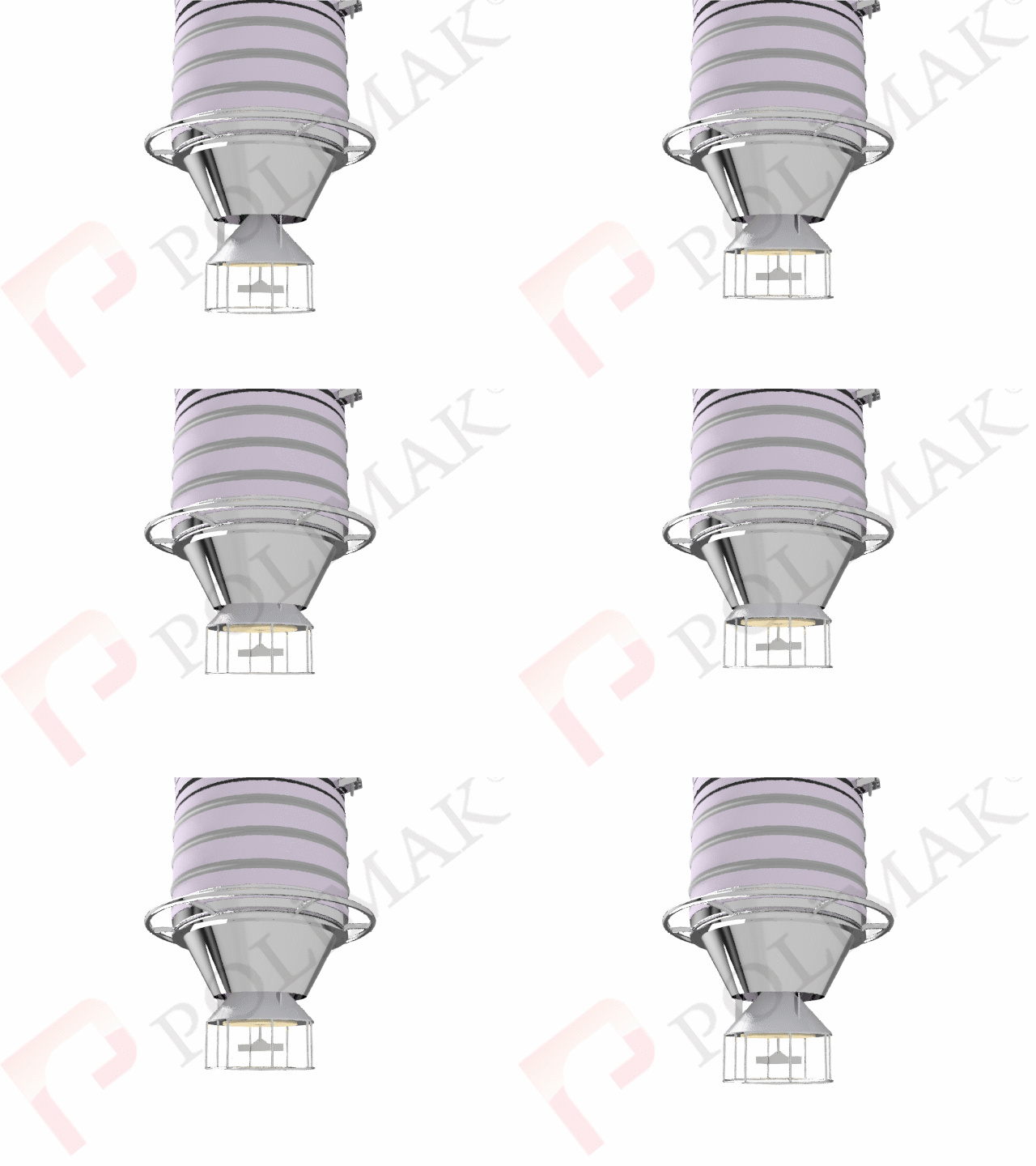
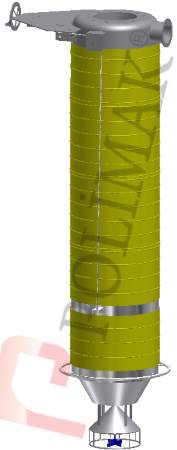
An in-line dust collector unit is designed for use in loading bellows systems to control airborne dust during the discharge of bulk materials. These collectors are suitable when there is sufficient vertical clearance beneath the discharge point, such as under a silo, hopper, or conveyor.
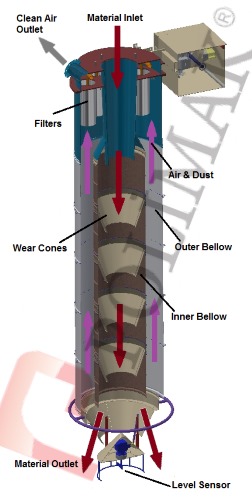
In this model, filter units are installed at the top of the loading bellow, allowing the bulk material to pass through the space between the filters during loading. As dust is generated, it is drawn through the filters, where particulate matter is effectively captured. The system uses automatically operated pulse jet filters to release short bursts of compressed air and clean the filters by dislodging accumulated dust. This dislodged dust falls directly back into the stockpile below, reducing material loss and preventing environmental contamination.
Offset Type Dust Collector
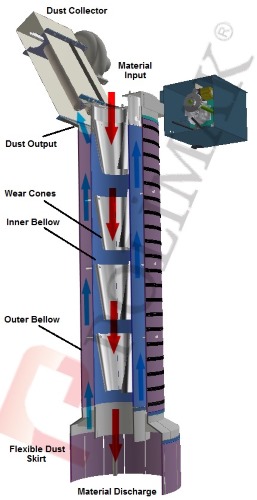
The inclined design of offset-type dust collectors occupies less vertical space and allows for easier installation beneath hoppers, silos, and other discharge units. These dust collector units are installed at an angle on the edge of the top flange of the loading bellow, making them especially suitable for locations with limited space above.
In this model, a vacuum fan is integrated into the system to generate the necessary airflow for dust extraction. During material discharge, the fan draws air from the discharge point of the loading bellow, effectively capturing airborne dust generated during the loading process. Air carrying dust passes between the inner and outer bellows, with filter units capturing the airborne particles. The system is equipped with automatically operated pulse jet filters, which release timed bursts of compressed air to clean the filters by loosening accumulated dust. The loosened dust then falls back into the stockpile below, reducing product loss and improving environmental cleanliness.
Separate Dust Collector
Separate dust collectors provide an effective alternative when the loading bellow installation area lacks sufficient space. They are independent units designed to handle dust extraction separately from the loading bellow itself.
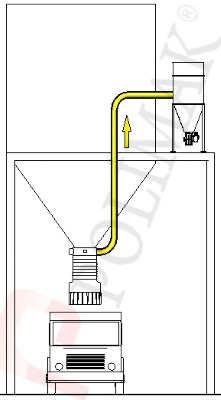
Equipped with their own fans, filter systems, and discharge hoppers, separate dust collectors operate as dust control systems separate from the loading bellow, allowing for flexible installation and easier maintenance. They are equipped with a built-in outlet that allows direct connection to external dust collection units, such as dust collection systems, fans, or bag house filters.
This flexibility enables integration with existing plant-wide dust control setups or customized solutions tailored to specific site requirements. By installing separate dust collectors, operators can ensure efficient dust capture and removal even in confined or space-restricted environments, maintaining clean air quality and minimizing material loss during bulk material handling.
Central Dust Collector
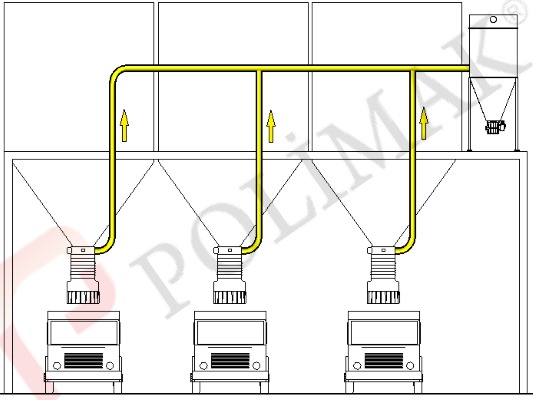
This model is ideal for applications where multiple loading bellows are used together in the same location. When a plant has a central dust collection system available, it can be connected directly to the loading bellows to manage dust more efficiently.
The air outlet on each loading bellow serves as the connection point to the central system, allowing the dust-laden air from all units to be moved through a common piping system. It is essential to adjust the airflow speed appropriately based on the specific operating conditions to ensure effective dust capture and prevent material buildup in the ducts. The dust collected from the loading bellows is then transferred and stored in an external dust collector connected to the central system. By utilizing a single central dust collector, the system reduces the need for multiple individual units, resulting in streamlined maintenance and cost savings. This configuration not only controls fugitive dust emissions effectively but also simplifies the overall dust management process in facilities with several loading bellows operating simultaneously.
Bottom Closure and Sealing Cone
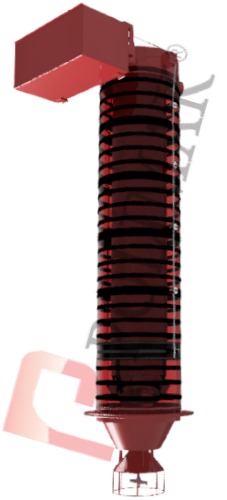
Effective containment of bulk materials during tanker loading is essential to maintain safety and minimize product loss. The bottom closure and sealing cone play an essential role in achieving this by preventing product spillage at the end of the loading process.
The conical-shaped valve is designed to move vertically and it seals the outlet port located at the bottom of the loading bellow. When the loading bellow is positioned on the tanker inlet flange, the conical valve moves downward, opening the discharge passage and allowing the product to flow into the tanker. After the loading process is finished, the loading bellow retracts, causing the bottom closure cone to move upward and close the outlet securely. This action retains any remaining product inside the loading bellow, effectively preventing spillage and ensuring a clean, controlled loading operation.
Sampler
To ensure product quality and compliance with specifications, sampling is a critical step in bulk material handling operations. Material composition, moisture content, particle size, and other physical properties are important characteristics of bulk solids that may need to be verified before loading. Bulk solid sampling systems are designed to collect representative samples from free-flowing bulk materials for quality control, laboratory testing, or process monitoring.
There are mainly two types of samplers used in loading bellow applications: manual and automatic. These are typically installed above the loading bellow to extract material from the flow for sampling during the loading process. During the loading process, the sampler extracts a small, controlled portion of the material for analysis without disrupting the overall flow. This allows operators to assess the consistency and condition of the bulk material in real time or in a laboratory setting, supporting better process control and traceability.
Loading Bellows for High Temperature Applications
In bulk solid handling systems where materials are discharged at high temperatures, high-temperature resistant loading bellows are essential. These systems are commonly used in challenging industrial applications such as the handling of fly ash, clinker dust, foundry sand, calcined alumina, metallurgical coke, and hot cement powder. Standard components are not suitable for such bulk materials, as excessive heat can damage mechanical parts and threaten safety.
To ensure reliable operation in these environments, all mechanical components—including electrical motors, sensors, limit switches, and actuators—should be selected from models specifically engineered to operate under high-temperature conditions. The fabrics used for the inner and outer bellows, as well as the sealing skirts, are manufactured from heat-resistant materials.
High-temperature resistant loading bellows are capable of safely handling bulk materials at temperatures up to 300°C, depending on the material specifications and installation design. These solutions not only ensure equipment durability but also maintain containment efficiency and environmental protection in extreme industrial environments.
Level Sensors
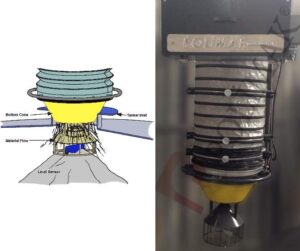
Level sensors are devices used to detect the presence or height of material, ensuring proper control of filling and discharge processes in bulk handling systems. In open and closed loading bellows, level sensors are used for different operational purposes.
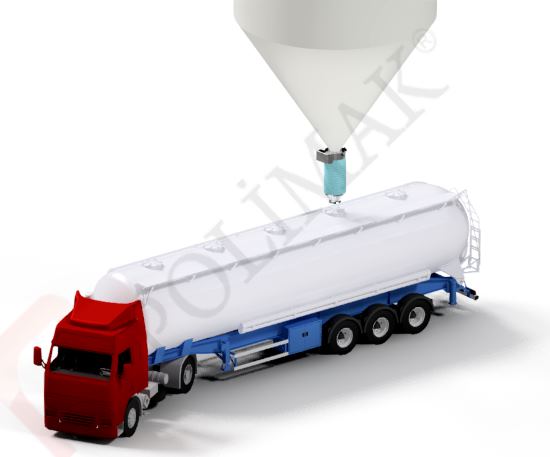
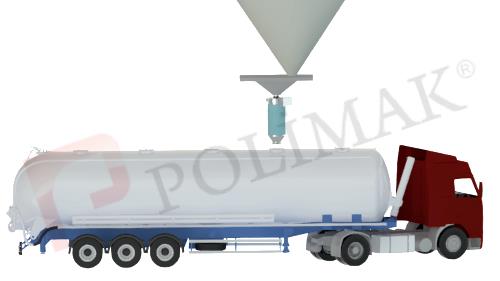
In closed vehicle loading systems, such as those used for filling tanker trucks, level sensors detect when the material has reached the inlet point of the vehicle. At this stage, a signal is sent to stop the loading process, preventing overfilling and spillage.
For open loading bellows, level sensors help manage the vertical movement of the bellow during loading. The lower dust skirt must stay positioned over the discharge area to contain dust emissions while allowing enough clearance for material to flow freely. As the material piles up, the sensor responds by gradually raising the skirt, maintaining effective dust control and smooth, efficient loading.
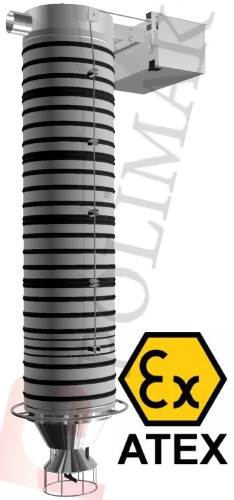
ATEX
Working with combustible raw materials in environments classified as explosive hazards requires specialized bulk loading bellows designed to meet strict safety protocols. In these applications preventing ignition sources is essential; this includes controlling excessive heat generation, eliminating dust emissions, and avoiding static discharge or electrical sparks during the transfer of materials.
To overcome these challenges, loading bellows are manufactured from conductive or antistatic fabrics that minimize static accumulation and safely release electrical charges. Moreover, all equipment installed in these hazardous zones must adhere to certifications such as ATEX and explosion-proof (Ex-proof) standards, ensuring compliance with legal regulations and minimizing the risk of accidents. These measures work together to ensure safe and stable operation during the handling of sensitive materials in hazardous environments.
Food Grade Loading Bellows
In food processing environments, maintaining strict hygiene and safety standards is essential. Food-grade loading bellows are specifically designed to meet these requirements. These systems are engineered with materials and components that comply with food industry regulations to prevent contamination and ensure product integrity throughout the loading process. All surfaces in direct contact with food materials are constructed from approved food-grade substances, such as high-quality stainless steel and FDA-compliant silicone. These materials resist corrosion and inhibit bacterial growth.
Every component of the loading bellow system, including the bellows fabric, filter bags, valves, and seals, should be carefully selected for its compliance with food safety certifications. The design is focused on easy cleaning and sanitation to maintain the highest level of hygiene. By using only food-certified components, these loading bellows provide a reliable solution for safe and efficient food handling operations across various industries such as flour milling, sugar processing, and powdered dairy products.
Handheld Control Pendant
To optimize and simplify the operation of loading bellows, handheld control pendants offer an effective solution in addition to the standard built-in electrical control panels. These remote control units enable operators to manage the loading process more effectively and with greater precision, especially in applications where mobility and ease of access are important.
We mainly provide two types of handheld control pendants: wired and wireless. These options offer versatility to suit different operational environments based on specific requirements. The use of these control pendants enhances flexibility, improves safety by allowing operators to maintain a safe distance, and increases overall efficiency during loading activities.
Communication with Other Systems
Ensuring reliable and seamless communication between the loading bellows and other plant automation systems is critical for efficient and coordinated operation. Therefore, the ability of the loading bellow’s electrical panel to exchange signals with other automation systems is a key requirement for reliable process control.
This communication allows its operation to be managed not only locally, but also remotely by other automated components. For instance, a truck weighing scale can transmit a stop signal to the loading bellow once the target filling weight is reached, thereby preventing overfilling.
In addition to receiving commands, the loading bellow can also perform control actions by sending signals from its own control panel to related equipment. These may include activating or deactivating silo discharge valves, conveyors, or other integrated systems, ensuring a streamlined and automated material loading process.
Weighing System
Integrating the loading bellow with a weighing system is essential to ensure precise, controlled, and efficient material handling during the loading process. Loading bellows can work together with various weighing systems, including weighing hoppers, dosing belt scales, and silo weighing systems, to provide precise measurement and delivery of bulk materials.
In applications such as tanker truck or open truck loading, truck weighing scales provide real-time weight data to monitor the quantity of product being loaded. These systems are capable of sending signals to the loading bellow’s control panel, automatically starting or stopping the loading process based on the actual measured weight. This level of integration not only improves operational accuracy but also minimizes product loss, prevents overfilling, and supports compliance with transport regulations.
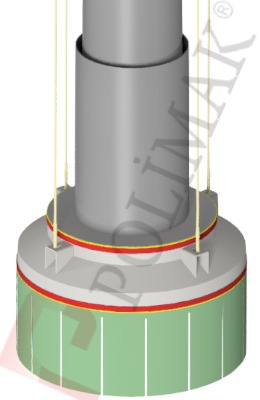
3 or 4 Lifting Cables
Loading bellows are used also in heavy-duty applications where reliable and stable operation is essential, especially under demanding conditions. In such applications, a standard 2-cable configuration may not provide the necessary support or stability. To provide a suitable solution, loading bellows can be manufactured with either a 3-cable or 4-cable lifting configuration, depending on the specific requirements of the installation.
While the 2-cable design is generally sufficient for standard truck loading with a wide range of bulk materials, it may be unsuitable in high-capacity operations, when longer bellow lengths are involved, or in outdoor environments where strong side winds are present. Under these more challenging conditions, the use of 3 or 4 lifting cables significantly increases the structural rigidity and stability of the loading bellows. This improved support system ensures smoother movement, minimizes the risk of misalignment or sagging, and contributes to a safer, more reliable and stable loading process.
Vibration Motor
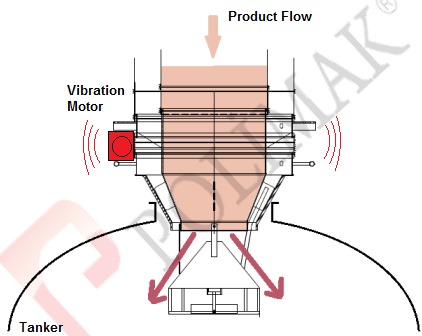
During the loading process with loading bellows, bulk solids such as cement, fly ash, lime, and other fine or powdery materials have the risk of accumulating or clinging to the inner surfaces of the equipment. This can lead to blockages, disrupted material flow, increased wear, and additional maintenance requirements.
To avoid such issues, vibration motors are installed to help remove any residual material from the internal parts of the bellow. These motors can be operated either during loading, to maintain continuous material flow, or after loading, to ensure complete discharge. This functionality helps maintain a clean system, reduces the risk of contamination between different loads, and supports smooth, efficient, and low maintenance operation of the loading bellows.
Spreader
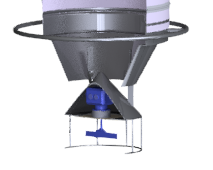
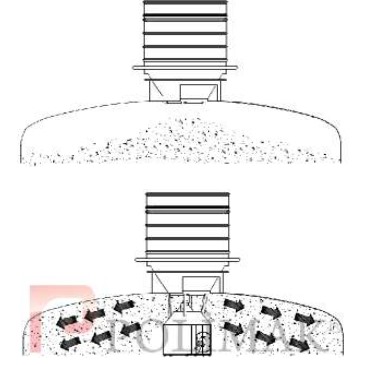
When handling bulk materials with low flowability, such as powders like cement, flour, plastic pellets, or powdered chemicals, achieving full tanker capacity can be challenging due to uneven or restricted material flow. To overcome this problem, material spreading systems have been developed to improve distribution during loading.
The spreader equipment is positioned near the outlet spout of the loading equipment to provide efficient loading into tanker trucks or storage tanks. Inside the spreader, rotating paddles actively distribute the material evenly throughout the interior part of the tanker, preventing clumping or piling in one area. This uniform distribution allows for a greater volume of material to be loaded, maximizing the utilization of available space. Thanks to this, the filling efficiency is significantly increased, which helps reduce overall transportation costs by optimizing each load and minimizing the number of trips required.
Polyurethane Coated Outlet Cone
Closed-type tanker loading bellows are equipped with a polyurethane-coated outlet cone designed to fit securely into the vessel inlet, effectively minimizing dust emissions during vehicle loading. The outlet cone is equipped with a durable, abrasion-resistant polyurethane coating that provides a flexible yet tight seal against the tanker inlet, significantly reducing the risk of dust leakage and environmental contamination.
Thanks to its carefully engineered conical shape, the outlet cone can is designed to fit a range of different tanker inlet diameters, ensuring a secure, dust-tight connection regardless of slight size variations. This design not only improves operational safety and cleanliness but also contributes to regulatory compliance by controlling dust release during loading.
Manual Winch Mechanism
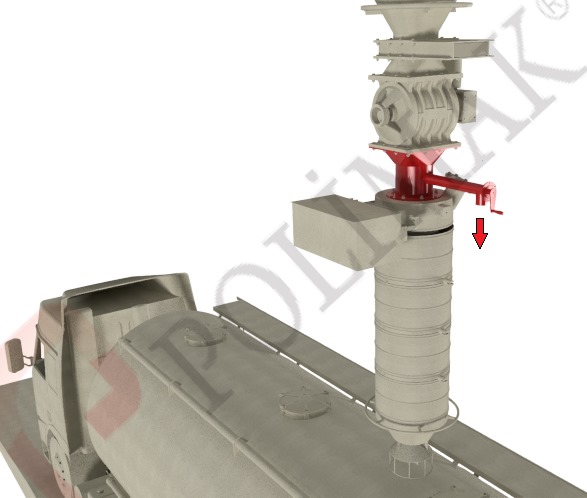
In applications where heavy-duty automation is not needed, loading bellows for tanker trucks and open trucks can be equipped with a manual winch mechanism. This configuration is equipped with a handwheel-operated winch. In this case, there is no need for the typical electrically powered motor, gearbox, and pulley system.
This system allows operators to manually raise and lower the bellows, providing a simple, cost-effective, and reliable solution for lighter or less frequent loading operations. The handwheel can be installed in an accessible location for ease of use, making the loading process straightforward and efficient without the complexity of automated controls.
Loading Bellow Positioners
Precise and efficient loading processes are essential in all industrial facilities, but achieving this can be challenging due to inconsistencies in vehicle sizes and loading positions. To address these challenges, loading bellow positioners are implemented to allow precise movement of the bellow instead of the vehicle.
Loading bellow positioners provide an effective solution by allowing the loading bellow to move as needed, rather than requiring the vehicle itself to be repositioned repeatedly. The loading bellow is installed under the positioner unit, which is remotely controlled to move the bellow quickly and accurately to the desired loading location. This system reduces loading time by enabling bulk material transfer to begin more rapidly, without the delays caused by moving the vehicle forward and backward to align perfectly with the loading bellow. As a result, loading operations become smoother, safer, and more productive, especially in busy or space-constrained environments.
We offer single-axis, double-axis, and articulating arm positioners to suit different application needs.
Single Axis Loading Bellow Positioners
Double Axis Loading Bellow Positioners
Articulating Arm Loading Bellow Positioners
Single-axis loading bellow positioners are designed to move the loading bellow along a straight, linear path. This motion occurs forward and backward over the vehicle, enabling precise alignment with the loading point. A specialized linear mechanism supports this one-directional movement, making the system well-suited for straightforward loading scenarios. By accurately positioning the bellow without the need to reposition the vehicle, the single-axis positioner enhances both efficiency and operational simplicity.
Double-axis loading bellow positioners are designed to move the loading bellow along both the length and width of the vehicle. This two-directional movement allows the system to cover a broader loading area, making it suitable for handling vehicles of different sizes and positions. A double-axis linear motion mechanism ensures smooth and accurate positioning of the bellow at the optimal loading point. By eliminating the need to reposition the vehicle, this system improves loading efficiency and operational flexibility, providing a more versatile and precise solution than single-axis loading bellow positioners.
Articulating arm loading bellow positioners are equipped with two conveyors, either screw or airslide, connected by rotating joints. This design allows for multi-directional movement, providing flexible positioning during loading operations.
The bulk material is conveyed through these fully enclosed systems, ensuring dust-free transfer. At the end of the articulated arm, the product is discharged directly into the vehicle via the loading bellow. This design offers an advanced and versatile positioning mechanism, capable of reaching difficult angles and optimizing loading efficiency in challenging environments.
Loading Bellow Vehicle Access Platform
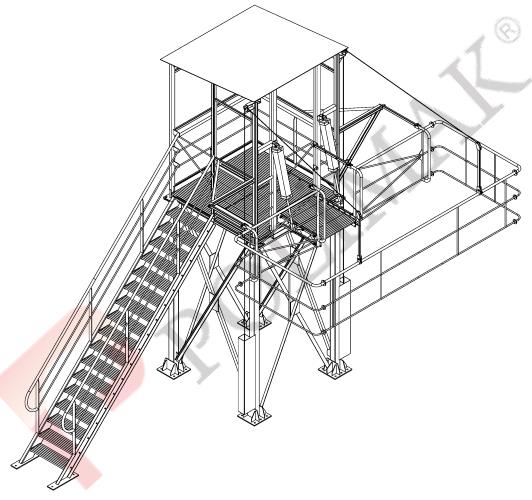
In some bulk handling systems, it might be necessary to provide operators with safe and convenient access to the loading area to facilitate various tasks such as opening tanker inlets, positioning loading bellows, and conducting routine maintenance. In response to these challenges, specially designed vehicle access platforms are installed, offering a secure and practical solution for operator access.
Each bulk handling facility presents unique challenges such as varying access points, silo discharge heights, and conveyor configurations. Therefore, these platforms are custom engineered to fit precisely with the specific operational and spatial requirements of the plant. This tailored approach ensures that personnel can perform their duties safely and efficiently, while maintaining optimal workflow and compliance with safety standards.
Custom Designed Loading Bellows
Many industrial applications of loading bellows require customized solutions to address unique operational challenges and specific material handling needs. Beyond standard models, loading bellows can be tailored through custom design to meet a wide variety of operational requirements. Achieving efficient, dust-free loading relies heavily on careful and precise engineering, and Polimak has the expertise and experience to design loading bellows tailored to the unique demands of each application.
There are several key factors in the design process, including the type and physical characteristics of the bulk solid being handled, the required loading capacity, environmental conditions at the loading site, and possible constraints posed by the installation space. All these must be carefully evaluated to ensure optimal performance. By taking these parameters into account during the design phase, a loading bellow can be optimized to deliver reliable performance, minimize dust emissions, and adapt seamlessly to the specific requirements of each operation.
Machine Safety
Ensuring the safety of bulk handling equipment is essential to protect workers and minimize environmental impact. Polimak’s bulk material loading bellows are built in accordance with strict safety and environmental standards. Our equipment hold CE certification, confirming that all necessary precautions have been taken to reduce the risk of accidents during bulk material handling operations.
To ensure the necessary safety standards, the machinery features a combination of mechanical and electrical locking devices, complemented by alarm systems specifically adapted to the conditions of each worksite. Together, these components guarantee secure operation, promoting a safe and secure environment for operators.
These valves are typically actuated by pneumatic actuators and are used to automatically open and close the product flow to discharge material to downstream equipment.
Installed below silos or hoppers, these valves are used for maintenance operations of equipment such as rotary valves, screw feeders, etc., that are positioned below the butterfly valve.
These valves are typically actuated by pneumatic actuators and are used to automatically open and close the product flow to discharge material to downstream equipment.
In this design, the butterfly valve is sandwiched between two flanges. Rubber sealing at both faces of the valve provides a tight seal between the flanges and the wafer butterfly valve.
One side of the valve has a bolted flange connection, while the other side features a built-in short pipe designed for fixing a flexible sleeve.
These valves have bolted flange connections on both sides, making them suitable for installation on silos, hoppers, screw feeders, and similar applications.
Bulk tanker trucks or open trucks can be filled with powdered materials delivered within FIBC bags. These systems generally consist of bulk bag discharging station, mechanical or pneumatic conveyor and loading bellow. Big bag discharge station transfers the bulk solid from big bag to conveying system. Conveying system transfers it to truck loading area. And loading bellow is used to fill tanker truck without any dust emission. Since truck loading operations are done within limited time, high capacity big bag discharge systems and bulk material conveying systems are used. For short distances, screw conveyors are preferred to transfer material from big bag discharge station to truck loading chute. For long conveying distances, pneumatic conveying systems provide better service. There may exist a storage hopper or silo above bulk truck loading bellow to compensate material flow between inlet and outlet. Bulk bag discharge and truck filling systems have automatic control system that monitors product level in truck and operates all equipment accordingly. Optional weighing system can be added to measure the amount of material that is filled to truck.
Big bag discharge systems can deliver dry bulk solids in powder and granular form to weighing and batching systems. The loading hopper of the weighing system should remain full during dosing and batching. Big bag discharge systems can monitor the product level in the loading hopper and maintain a constant level automatically. Depending on the dosing speed and conveying distance, mechanical conveying systems or pneumatic loading systems may be used. Dust collectors can be employed to prevent dust emissions during hopper loading, especially for materials with high dust content.
Dry bulk packaging systems are used to fill powdered or granular materials into bags, drums, jars, sacks, etc. Bulk materials delivered in big bags must be transferred to packaging machines without interruption. The loading hopper of the packaging system should remain full during the filling and packaging process. Big bag discharge systems can monitor the product level in the loading hopper and maintain a constant level automatically. Depending on the packaging speed, mechanical conveying systems or pneumatic loading systems can be selected. Dust collectors can be used to prevent dust emissions during hopper loading, especially for materials with high dust content.
Mixer automation systems are used to mix dry bulk solids according to specific recipes. Raw materials delivered in FIBC bags can be transferred to mixing units through a combination of conveying equipment and bulk bag discharge systems. Depending on the type of application, pneumatic conveying or mechanical feeding systems can be used to fill mixers. Big bag discharge stations can be manufactured with built-in dosing systems. The amount of raw material to be loaded into the mixer is automatically controlled with the help of a weighing and dosing system. Dust collectors can be used to prevent dust emissions during the mixer filling process.
Bulk material stored in big bags can be automatically filled into small bags. Big bag discharge systems come with optional built-in bag filling units. For low filling capacities, these units are installed below the big bag discharge hopper, providing a practical and cost-effective solution. Both big bag discharging and bag filling operations can be handled by a single, compact system. For higher bag filling needs, bag filling machines are installed near the bulk bag discharge stations. Pneumatic conveying systems or mechanical conveyors can be used to transfer bulk material from the FIBC bag discharge station to the bag or sack filling system.
Mechanical conveyors can be used for silo loading from big bag discharge stations. Screw feeders, bucket elevators, rotary valves, or chain conveyors are connected to big bag discharge stations to fill silos. The selection of conveying equipment directly depends on the conveying distance, height, transferred material, and capacity. Bucket elevators are preferred for high silos, while screw feeders are preferred for shorter silos and short distances. The big bag discharge system can be installed on top of the silo for faster filling. In this case, rotary valves or butterfly valves are better choices as they provide simple flow control. Dust collection systems may be required depending on the dust content of the bulk solid. During silo loading, air content in the silo escapes to the atmosphere and carries some dust along with it. Vacuum fans and jet filters in dust collectors prevent dust emissions into the environment. The collected dust is sent back to the silo, thus preventing product loss.
Pneumatic conveying systems installed after bulk bag discharge units transfer bulk material through conveying pipelines to fill silos. This configuration is useful in applications where high transfer rates and long conveying distances are needed. In production lines where raw materials are stored in warehouses far from storage silos, bulk bag discharge stations can be installed close to the warehouses, and pneumatic conveying systems are used to fill silos from long distances. This design reduces the need for forklifts and cranes for bulk material transfer on the production site and increases overall efficiency.
Pneumatic conveying systems used for silo loading utilize blower pumps or compressors. Motor power, pipeline diameter, and equipment selection depend on the type of bulk material, transfer distance, silo height, and transfer capacity. Level sensors, jet filters, and other equipment are installed on storage silos to ensure the proper operation of the silo filling system.
Pneumatic conveying systems installed after bag dump units transfer bulk material through pipelines to fill silos. This configuration is ideal for applications requiring high transfer rates and long conveying distances. In production lines where raw materials are stored in warehouses far from storage silos, bag dump stations can be installed close to warehouses, allowing pneumatic conveying systems to transport materials over long distances. This design reduces the excessive use of forklifts and cranes for bulk material transfer within the production site, improving overall efficiency.
Pneumatic transfer systems used for silo loading utilize blower pumps or compressors. Motor power, pipeline diameter, and equipment selection depend on factors such as the type of bulk material, transfer distance, silo height, and transfer capacity. Level sensors, jet filters, and other equipment are installed on storage silos to ensure the proper operation of the silo filling system.
Mechanical conveyors can be used for silo loading from bag dump stations. In this configuration, screw feeders, bucket elevators, rotary valves, or chain conveyors are connected to bag dump stations to fill silos. The selection of conveying equipment depends on factors such as conveying distance, height, material properties, and capacity. Bucket elevators are preferred for high silos, while screw feeders are ideal for shorter silos and short distances. Bag dump systems can be installed on top of the silo for faster filling. In such cases, rotary valves or butterfly valves are better choices as they provide simple flow control.
Dust collection systems may be required depending on the dust content of the bulk solid. During silo loading, air inside the silo escapes to the atmosphere, carrying dust particles with it. Dust collectors equipped with a vacuum fan and jet filter capture airborne dust. The collected dust is returned to the silo, preventing product loss and ensuring a cleaner environment.
The inlet skirt is an optional feature designed to extend the lifespan of the flexible connector sleeve. Its upper portion is attached to the outlet port of the upstream equipment and extends down into the bin activator’s inlet port. The primary function of the inlet skirt is to serve as a protective shield, safeguarding the flexible connector seal from wear and damage.
A vibratory motor is externally mounted to the bin activator. When powered, the motor generates vibrations that facilitate a steady flow of dry bulk materials within the system. Depending on the application requirements, one or two vibratory motors can be installed externally.
To accommodate a bin activator, the cone of a silo must be shorter than usual, resulting in a wider outlet. A flange supplied with the bin activator is separately welded to the silo’s outlet, slightly above the opening, at the production site. Once installed, the vibrating bin discharger is securely bolted to the flange, ensuring a stable and reliable connection.
Special spring suspension links and an engineered polymer seal work together to create a flexible connection between a vibrating bin discharger and the equipment positioned above it.
The proper design and installation of the polyurethane seal prevent it from slipping off and ensure a secure seal, eliminating the risk of dry bulk material leakage. Additionally, the seal offers high stress resistance and long-term durability, withstanding stresses caused by motor vibrations, pressure conditions, and other operational factors.
Externally installed spring suspensions provide full resilience to the vibrations of the cone head. They ensure that the generated vibrations affect only the cone itself rather than the upstream equipment structure.
An internally tapered, conical-shaped baffle plate is positioned at the center of the bin activator’s diameter. The baffle is rigidly attached to the equipment body using structural steel components. It facilitates bulk material flow from upstream equipment by directly inducing vibrations into the material.
A secondary deflector plate reduces the weight of the bulk material in the lower portion of the bin activator by acting as a wedge beneath the material, directing it around the areas adjacent to the cone’s surface.
Polimak baffle plates are available in various configurations, including convex and cone plates, and in different angles (15°, 30°, 45°, or even 60°) depending on the flow characteristics of the handled bulk material and the specific application requirements.